Introduction
AMP (Accelerated Mobile Pages) Email is one of the supported message types in Mapp Engage. While all email types follow the same lifecycle, personalization capabilities, and sendout logic, AMP extends traditional email functionality by enabling dynamic and interactive content directly within the inbox.
Instead of redirecting recipients to an external landing page, AMP emails allow users to perform actions such as submitting forms, browsing product selections, or viewing updated information without leaving the message.
Because AMP emails require specialized HTML and supported email clients, they are typically implemented with technical involvement.
Note
For an overview of shared email structures, lifecycle, and personalization features, see Email Model in Mapp Engage.
How AMP Differs from Other Email Types
AMP introduces capabilities that go beyond standard HTML or CMS-based emails:
Enables interactive, app-like experiences inside the email
Supports dynamically updated content
Requires a fallback HTML version for unsupported clients
Depends on email client compatibility
Involves additional technical implementation
These characteristics make AMP particularly suitable for advanced engagement scenarios.
How AMP Fits into the Email Architecture
AMP emails are not standalone replacements for traditional emails. Each AMP message must include a standard HTML fallback version to ensure that recipients using unsupported email clients can still access the content.
When an email client supports AMP, the interactive version is displayed automatically. Otherwise, the fallback HTML version is shown.
This dual-format approach preserves deliverability while enabling enhanced functionality where supported.
When to Use AMP Email
AMP is most effective when interaction within the inbox provides clear value to the recipient experience.
Typical scenarios include:
Collecting feedback or preferences using embedded forms
Displaying dynamic product or content lists
Allowing recipients to browse multiple offers within a carousel
Presenting frequently updated information
AMP may be less appropriate when maximum reach across all email clients is the primary objective.
Requirements and Preparation
Before creating AMP emails, ensure the following prerequisites are met:
The AMP Email feature is activated for your system
Your organization is registered to send dynamic emails (for example, with Google)
Sender security requirements are reviewed and fulfilled
Technical resources are available to develop AMP HTML content
Building AMP content requires technical expertise. Organizations without internal development support should consider working with their customer success or account representative.
Core Capabilities
Mapp Engage supports several AMP components that enable interactive email experiences: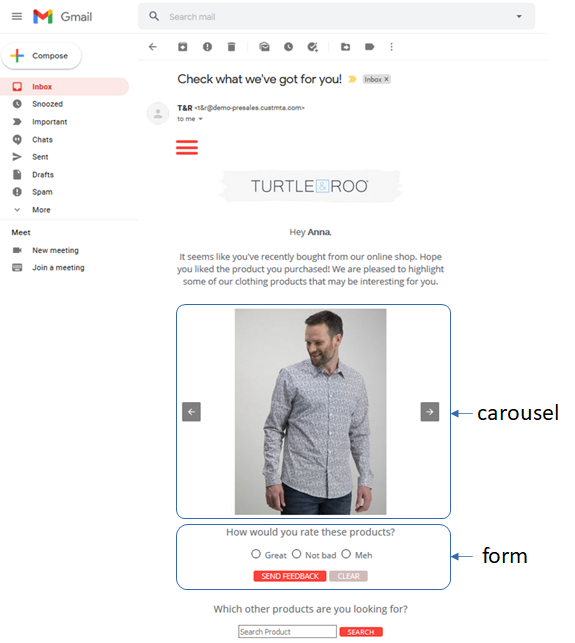
AMP Carousel
Displays multiple images or offers within a single interactive element.
AMP Form
Allows recipients to submit responses directly inside the email.
AMP List
Shows dynamically updated collections of links or items.
These components can be combined to create engaging messages while maintaining compatibility through fallback content.
Testing and Compatibility
AMP messages should always be validated before sending to ensure proper rendering and functionality.
Testing typically requires a supported email client with dynamic email enabled and sender approval configured. Verify both the AMP version and the fallback HTML experience during testing.
Performance Insights
AMP email performance can be evaluated using standard message statistics in Mapp Engage, including delivery metrics, open rates, click-through rates, and recipient activity. These insights help teams assess the effectiveness of interactive campaigns.
Limitations and Considerations
Before adopting AMP, consider the following constraints:
Not all email clients support AMP
A fallback HTML version is mandatory
Development effort is higher than for traditional email formats
Thorough testing is required to ensure compatibility
AMP is most effective when its interactive capabilities provide measurable value to the recipient experience.
Evaluating AMP for Your Strategy
AMP for Email is an evolving technology. Organizations should evaluate client support within their audience and determine whether interactive functionality aligns with their communication goals before adopting it at scale.