This page explains how tracking data moves through the Android SDK from collection to delivery.
It is a conceptual reference page, not a setup guide. Use it when you want to understand how requests are buffered, scheduled, and sent.
Overview
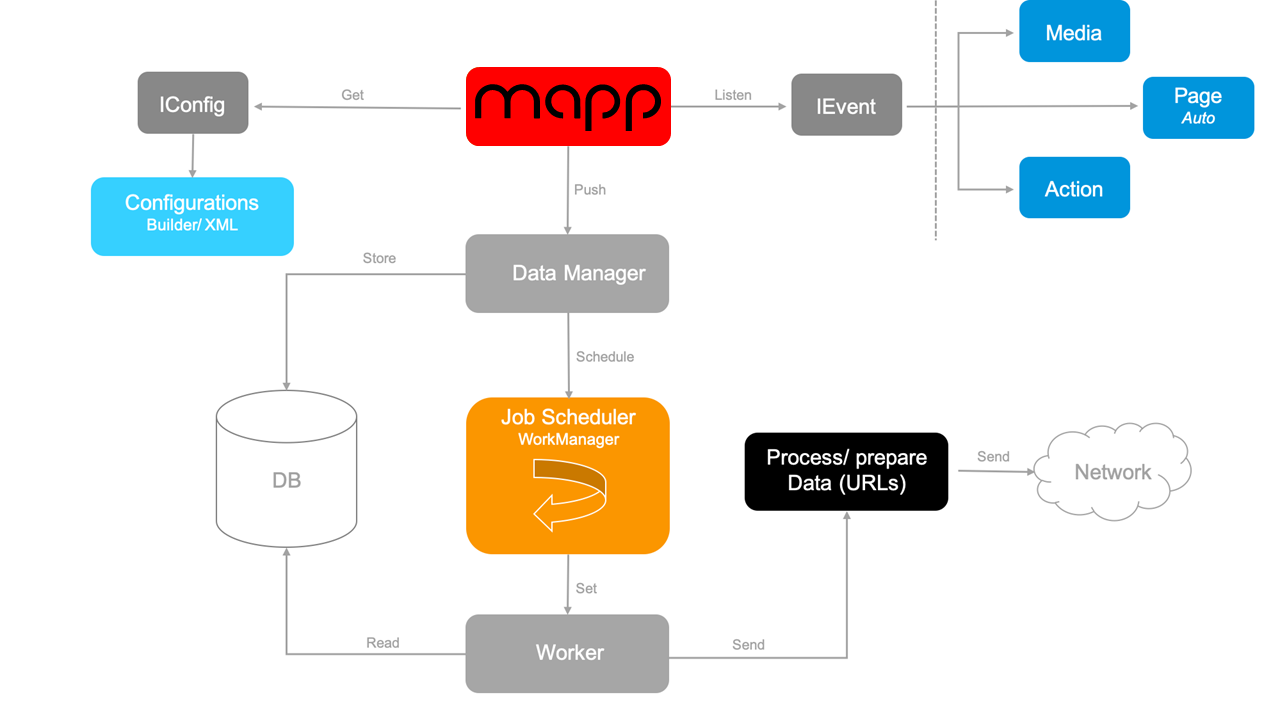
1. Collection
The SDK collects tracking data through the tracking APIs and prepares requests in the background so the app's main thread stays responsive.
Page views, events, media actions, and related parameters are recorded through the SDK tracking interfaces.
If requests cannot be sent immediately, the SDK buffers them until they can be processed.
2. Scheduling and delivery
Buffered requests are delivered through the SDK's background scheduling flow.
Request delivery is coordinated through WorkManager.
The configured request interval defines a minimum interval, not an exact send time.
If the device is offline, requests remain cached and are sent later when delivery is possible again.
This means requests may be sent later than the configured interval, depending on Android system conditions.
3. Processing in Mapp
After delivery, the tracking data is processed by Mapp Intelligence and becomes available for reporting and analysis.
When to use this page
When you want to understand why requests are not always sent immediately
When you need a conceptual view of buffering and background delivery
When you want to connect tracking behavior with WorkManager-based scheduling
Related: Configure WorkManager Constraints, Send Tracking Data in Batches, Immediate Data Send & Cleanup